Spontaneous Discovery
The most memorable moments were the ones people found themselves: an unassuming roadside spot or a tip from a local. Handed the same place by an algorithm, the same find lost its appeal.
Maps routes the trip. Magic happens between the pins.
Maps × Gemini × Road Trips
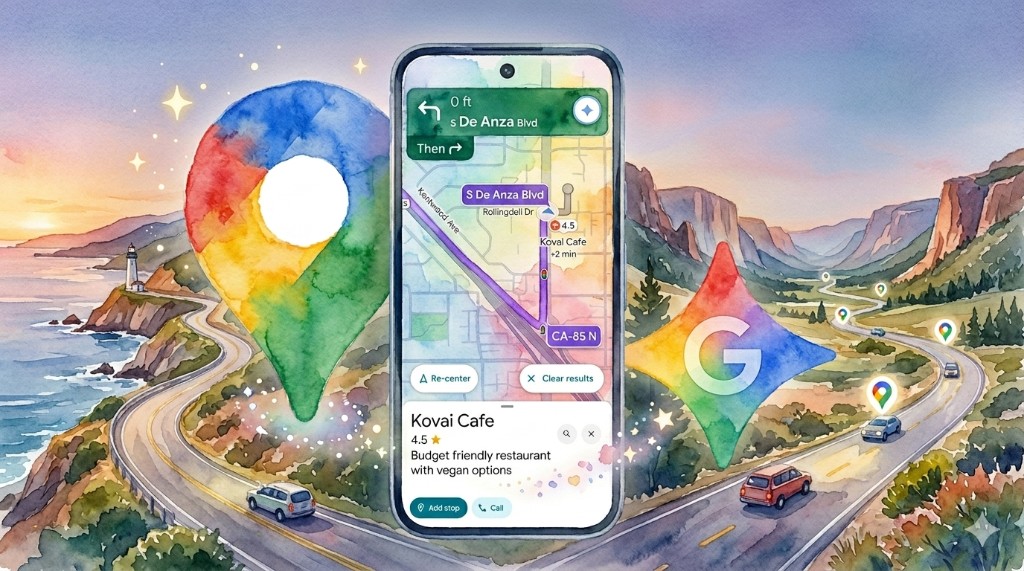
Road trips are the rare trip Gen Z takes to be present, but the available tools pull travelers out of the moment to manage logistics while the trip happens around them. We built Road Trip Jam, a shared space on Google Maps where friend groups plan together, adapt on the road, and create memories that become the stories they tell after.
I worked across research, ideation, and design, leading the social discovery layer, pioneering Hidden Gems, and building a prototype to test interactions on the road.
Google partnered with our capstone team to explore how Gen Z experiences road trips, and where Gemini could help create magic on the road.
Beyond getting from A to B, Maps is where most go to find new places. For Gen Z, that discovery happens predominantly on social platforms built on what friends recommend. On the road, the trip bends around whoever’s holding the phone, one person carrying the route, the stops, and the decisions while everyone else rides along.

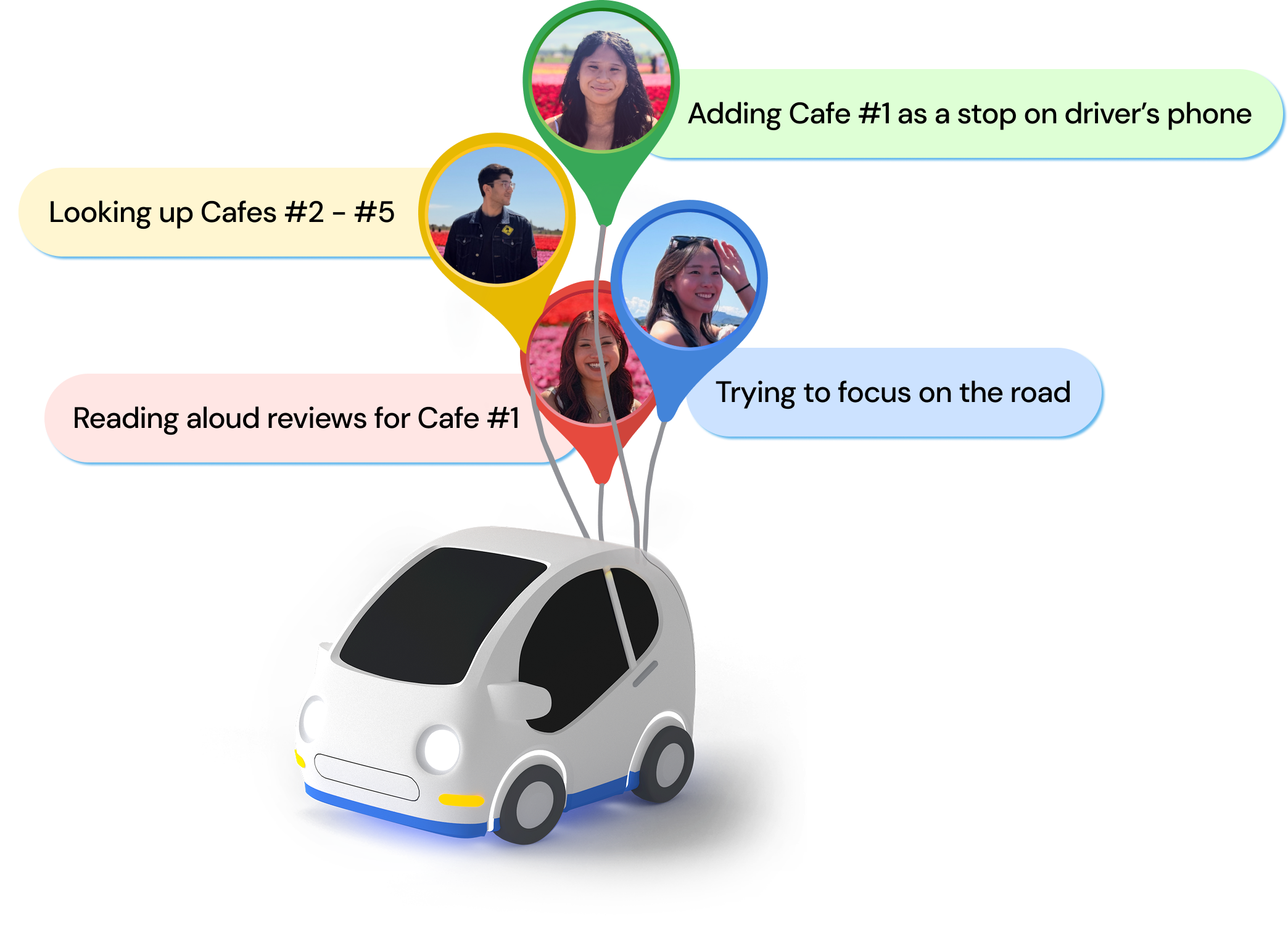
Funneling the planning, coordination, and logistics through one phone is what pulls a group out of the moment. So we set out to understand the conditions magic actually needs, and what stands in its way.
What if Google Maps and Gemini could carry the coordination, giving road trippers more room for spontaneity, connection, and magic along the way?
We searched for magic through 9 in-depth interviews with Gen Z road trippers who had recently taken a trip with friends and 1 road trip creator, plus 2 road trips as field studies to feel the friction in the moment instead of hearing about it after.
“Spontaneity is fun to look back on, but the connection is the thing that I’m carrying and feel even now. Those specific magical moments were great. But they’re like the sprinkles. Whereas the connections, they’re the ice cream.”
— Participant 9

Spontaneous Discovery
The most memorable moments were the ones people found themselves: an unassuming roadside spot or a tip from a local. Handed the same place by an algorithm, the same find lost its appeal.
Human Connection
The people in the car mattered more than any destination. Being present in the moment is something a road trip makes room for and AI can interrupt.
Support and Alignment
Connection and discovery only happen when the group isn’t stuck negotiating, passing phones around, or waiting for a majority vote. Coordination friction crowds magic out, alignment is the quiet work that holds everything up.
We assumed Gemini could make magic by doing more. Research said the opposite: magic can’t be manufactured, and the harder AI reaches, the less real it feels. So Gemini’s job became clearing friction, not creating magic. Every step below traded more help for the right help.
The first version helped the driver decide faster. But the problem wasn’t speed. It was one person holding everything: the phone, the stops, the road. So contribution opened to the whole car: everyone shapes the shared itinerary, and the Travel Blend turns the group’s tastes into picks that fit.
A ranked list makes you stop and dig, which no group can do mid-drive. So discovery moved onto the map, where it’s glanceable, and onto friends. I led this layer: Hidden Gems let you leave a find at a real place, marked with your face, for friends to discover as they pass by. A stop you stumble into beats one you’re handed.
The easy path was full automation: Gemini inferring everything from your history. But Gen Z trusts people over algorithms and wants to curate, not be handed a finished trip. So choices stay manual, gems stay tied to real places, and after Timeline’s backlash, Gemini uses only what the group gives it.
Building on a teammate’s first prototype, I led interaction development, pulling the itinerary, search along the route, and the social layer onto one map. Then we took it on a real drive to see whether it took stress off the group in the moment or added to it.
Road Trip Jam is built on the ice cream framework from research, with one feature for each layer.
Holding the group together.
I led the shared itinerary and the join flow.
A trip starts by scanning a QR code in the car, not by sending a link. Part of the reason is privacy, but the bigger one is presence: a scan only works when everyone is together, so joining means you’re actually there. From there the group builds one shared itinerary on the same map, and the Travel Blend uses Gemini to turn everyone’s tastes into recommendations that fit the whole car. Discovery happens on the map, but the itinerary keeps Maps’ familiar list as a second view instead of replacing it, because the list already works for lining up stops.
The part people carry home.
I led the social discovery layer.
Trusted recommendations already exist, but they’re scattered across group texts you’d have to know to search. Hidden Gems put them on the map. You leave a photo at a place for whoever comes after, and Gemini surfaces it as they get close, with your face on the pin before they tap in. When you mark it, you choose who sees it: just you, the jam, or everyone. A friend who finds your gem can leave their own, so a place fills up with the marks of everyone who loved it. The map turns from directions into a record of your people.
The trip that lives on after the drive.
I built the Wrapped interactions.
The moments people remember are the unplanned ones, and they usually disappear into a camera roll. Road Trip Wrapped keeps them. With your permission, it pairs the route you drove with moments from Google Photos, and you curate the story, up to five photos you choose. It leads with the number the product exists to move, like “for every two stops you planned, you found one more along the way.” When it’s done, it saves to your Passport, the record of every road trip you’ve taken, so the trip doesn’t end when you get home.